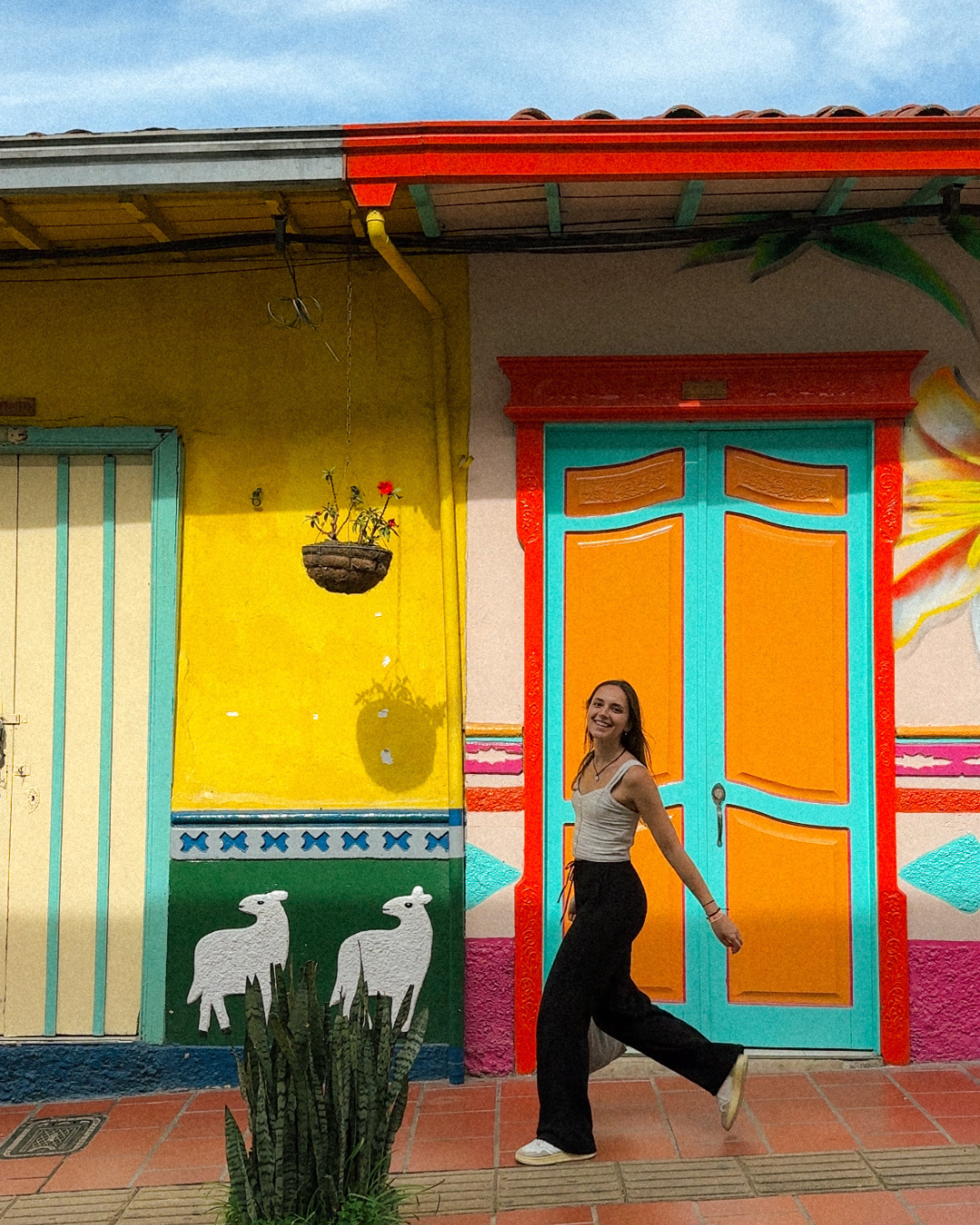
I still remember arriving at Bogotá airport alone: my backpack got lost and didn’t make it to my destination, my phone was almost dead, and the only charger (my world travel adapter) I had was in my “lost” checked-in luggage. I spoke only two words of Spanish and was slightly questioning my life choices.
Because here’s the thing… before coming to Colombia, almost everyone told me the same thing:
“Isn’t it dangerous?”
“Are you sure you should go alone?”
And honestly… I believed them a little. But for a long time, I was really intrigued by this country, and I just had to go.
What I experienced in Colombia was completely different from what I expected. Not always easy, but way more beautiful, social, and empowering than I imagined.
So if you’re thinking about solo traveling in Colombia, here are some of the most important things I wish I knew before going.
Why I Chose Colombia for Solo Travel (and Why You Might Love It Too)
Colombia was definitely on my travel list, but not necessarily on my solo travel list. After looking into internship opportunities for my studies (which never happened because of COVID), my interest in the country grew even stronger.
First of all, it’s incredibly diverse. One week you’re in the mountains, the next you’re near the Caribbean, and then suddenly you’re in the jungle.
But what really stood out to me was the vibe.
Colombia is one of those places where it’s very easy to meet people. Hostels are social, locals are warm, and there’s always something happening — salsa, tours, day trips, random conversations that turn into dinner plans.
It’s relatively affordable compared to many other destinations, especially if you’re coming from Europe.
And maybe the biggest thing: it feels like an adventure. Not a polished, predictable trip, but something a bit more raw and real.


Is Colombia Safe for Solo Travelers?
Let’s talk about the big question.
Short answer: yes, but you need to be aware and use common sense.
Colombia has changed a lot over the years, but it’s still not a place where you can be completely careless. That doesn’t mean it’s dangerous all the time — it just means you need to travel smart.
Here are a few things that helped me feel safe:
- I avoided walking alone at night in unfamiliar areas. In cities like Bogotá or Medellín, I didn’t walk alone after dark anywhere.
- I didn’t wear flashy jewelry or show my phone too much in public.
- I used apps instead of taking random taxis on the street (more on that later).
- I stayed in well-rated hostels or accommodations.
- I asked locals or hostel staff before going somewhere new.
There were moments where I felt a bit uncomfortable (usually after dark or in less touristy areas) but I never felt truly unsafe.
That being said, it’s important to be honest about something.
While most travelers have an amazing and safe experience, I also met people along the way who had more serious incidents like theft, being robbed (at knifepoint and gunpoint, or getting their drink spiked.
These situations are not the “everyday reality,” but they can happen, especially if you let your guard down in certain situations or nightlife areas.
For me, this just reinforced one thing: stay aware, trust your instincts, and don’t take unnecessary risks; especially at night or when going out. If you stay alert and make smart choices, you’ll likely have an amazing experience.
👉 I go much deeper into safety, scams and real-life experiences and situations in my Colombia Travel Guide.
Best Places in Colombia for Solo Travelers
Not every place in Colombia feels the same. Some are way more solo-travel-friendly than others. These were a few of my favorites:
Medellín
Probably the easiest place. Medellín has a huge digital nomad and backpacker scene, which makes it very easy to meet people. There are tons of hostels, coworking spaces, and activities. It’s super easy to meet other people and join tours.
It feels modern, organized, and surprisingly comfortable.
👉 Best for: solo travelers, social vibe, longer stays
Cartagena
Beautiful, colorful, and very photogenic.
Cartagena is more touristy, which has pros and cons. It’s easy, with lots of things to do in and around the city, but also more expensive and busier.
Still, it’s worth visiting, even if just for a few days.
👉 Best for: short stay, beach vibes, aesthetics
Minca & Tayrona
This area is perfect if you want nature.
I absolutely loved places like Minca and Tayrona National Park, some of the most beautiful and nicest areas in Colombia in my opinion. Think jungle, beaches, and no WiFi.
And these are good places to slow down a bit.
👉 Best for: nature, hiking, disconnecting
Salento
One of my personal highlights.
Salento is a small town in the coffee region, surrounded by green hills and famous for the Cocora Valley (those super tall palm trees you’ve probably seen on Instagram).
It’s calm, safe, and a great place to recharge.
👉 Best for: chill vibes, coffee, nature


Practical Tips for Solo Travel in Colombia
This is the stuff you’ll actually want to know before you go.
Budget
Colombia can be quite affordable depending on your travel style.
- Budget traveler: €30–50/day
- Mid-range: €50–100/day
Accommodation
If you’re traveling solo, I highly recommend staying in hostels, at least for part of your trip.
Not just for the price, but because it makes everything easier:
- meeting people
- joining tours
- getting local tips
Look for hostels with good reviews and a social atmosphere (but not necessarily party-only, unless that’s your thing of course).
I’ve also included my favorite places to stay in each destination — the ones that are actually safe, social, and worth it — in my Colombia travel guide.
Getting Around
Buses are the most common way to travel between cities. They’re cheap but can be long (Colombia is bigger than it looks). Night buses are also a great option, but not every route is ideal or safe for overnight travel.
For longer distances, domestic flights are often worth it and not too expensive.
In cities, use apps instead of hailing taxis on the street. (Uber is technically illegal in Colombia, but still widely used — and not all apps or situations are equally safe. I break down exactly what to use, when, and what to avoid in my guide.)
Internet & SIM Card
Getting a local SIM card is easy and cheap.
You’ll want data for:
- maps
- ordering transport
- staying connected
WiFi in ho(s)tels is usually decent, but not always reliable. You can also use eSIMs. My go-to eSIM is Saily (I’ve tested a bunch of different providers). You can get a 15% discount by using “drivingyounomad15” at checkout.
Do You Need Spanish?
Short answer: no, but it helps — a lot.
In bigger cities, you’ll find people who speak English. But in smaller towns, not so much.
Even basic Spanish makes a big difference: not just practically, but also in how locals interact with you.
👉 Planning a trip like this can feel like a lot. I’ve put all my routes, stays, and tips into one simple Colombia Travel Guide if you want to make it easier for yourself.
What Solo Travel in Colombia Taught Me
This trip challenged me in several ways. I’ve solo traveled to countries where I felt unsafe or had to be more alert, but those moments were usually unexpected. Here in Colombia, I arrived with the idea of “it’s less safe, so be careful.” On the one hand, this helped me stay alert and make smart choices, but on the other hand, I was looking at Colombia through a very specific lens of “this is a dangerous country.” At the beginning, I was in a constant state of alertness, but after some time I realized this wasn’t always necessary.
It was also the first time for me that I couldn’t fully rely on English everywhere. Figuring things out when no one speaks your language can be fun, but it can be challenging sometimes when you’re a solo female traveler haha.
I once arrived at a bus station in the middle of the night and had to fully rely on my instincts. It felt like a sketchy environment: people sleeping on the ground with machetes attached to their waist, and the only police officer around didn’t speak a word of English.


You also see police patrols everywhere, which can sometimes feel a bit intense or unusual when you’re not used to seeing that kind of presence in the streets.
This trip made me more independent, but also more open. I met incredible locals and had some moments I’ll genuinely never forget. It reminded me that the world isn’t always as scary as it seems…
Maybe the biggest lesson? Most of the fear I had before going wasn’t actually real: it was shaped by headlines and assumptions from people who have never been there.
That doesn’t mean Colombia is perfect, but it does mean it’s worth experiencing for yourself! 🙂
Is Solo Travel in Colombia Right for You?
Colombia is not a “super easy” destination, and that’s part of the beauty of it.
You’ll probably love it if:
- you’re open-minded and adaptable
- you like a mix of social + solo time
- you’re okay with a bit of unpredictability
It might be less ideal if:
- you want everything to be very structured and controlled
- you’re uncomfortable navigating new situations alone
- you expect a luxury, stress-free experience
✈️ Planning Your Trip to Colombia
I know how overwhelming it can feel to plan a trip like this — especially on your own. There’s so much information online, and honestly, a lot of it is either too vague or too extreme in my opinion, which makes it even harder to figure out what actually matters.
That’s exactly why I created my Colombia Travel Guide.


It’s basically everything I wish I had before going, including:
- a clear 2, 3 and 4 week itinerary
- exact budget breakdowns
- where to stay in each place
- real safety tips (not the generic ones)
- all the small things that make a big difference
So you don’t have to figure everything out from scratch.
👉 If you’re planning a trip to Colombia, you can check out the Travel Guide here.
Final Thoughts
Solo travel in Colombia isn’t always easy, but it’s one of those experiences that stays with you.
It pushes you a little. Surprises you a lot. And shows you that you’re capable of more than you think.
And who knows, maybe you’ll also find yourself standing in a random bus station, slightly lost… but feeling completely alive.
❓ FAQ: Solo Travel in Colombia
Is Colombia safe for solo female travelers?
Yes, but like anywhere, you need to stay aware — and there are areas you should avoid. Avoid walking alone at night, don’t show valuables, and choose safe areas to stay.
How much does it cost to travel solo in Colombia? Is Colombia expensive?
On average, €30–50/day for budget travelers and €50–100/day for mid-range travel.
Do you need Spanish in Colombia?
It’s not required, but it helps a lot — especially outside major cities.
What is the best city in Colombia for solo travelers?
Medellín is often considered the best due to its social vibe, infrastructure, and expat community. But there are so many other amazing locations like Minca, Palomina, Salento, Tayrona National park,…
What is the best time to visit Colombia?
The best time to visit Colombia is generally between December and March, and July to August. These months are usually drier, which makes it easier for activities like hiking, exploring cities, and visiting places like Tayrona or the Coffee Region. That said, Colombia is a year-round destination — even in the rainy seasons (April–May and October–November), showers are often short and don’t last all day.
PS: I traveled for an entire month in June and barely had any rain — mostly sunny days!
👉 If you’re thinking about going to Colombia and want to feel prepared, safe, and actually enjoy the experience instead of overthinking every step — I’ve put everything you need into one simple, step-by-step guide.
You can check out my Colombia Travel Guide here.